
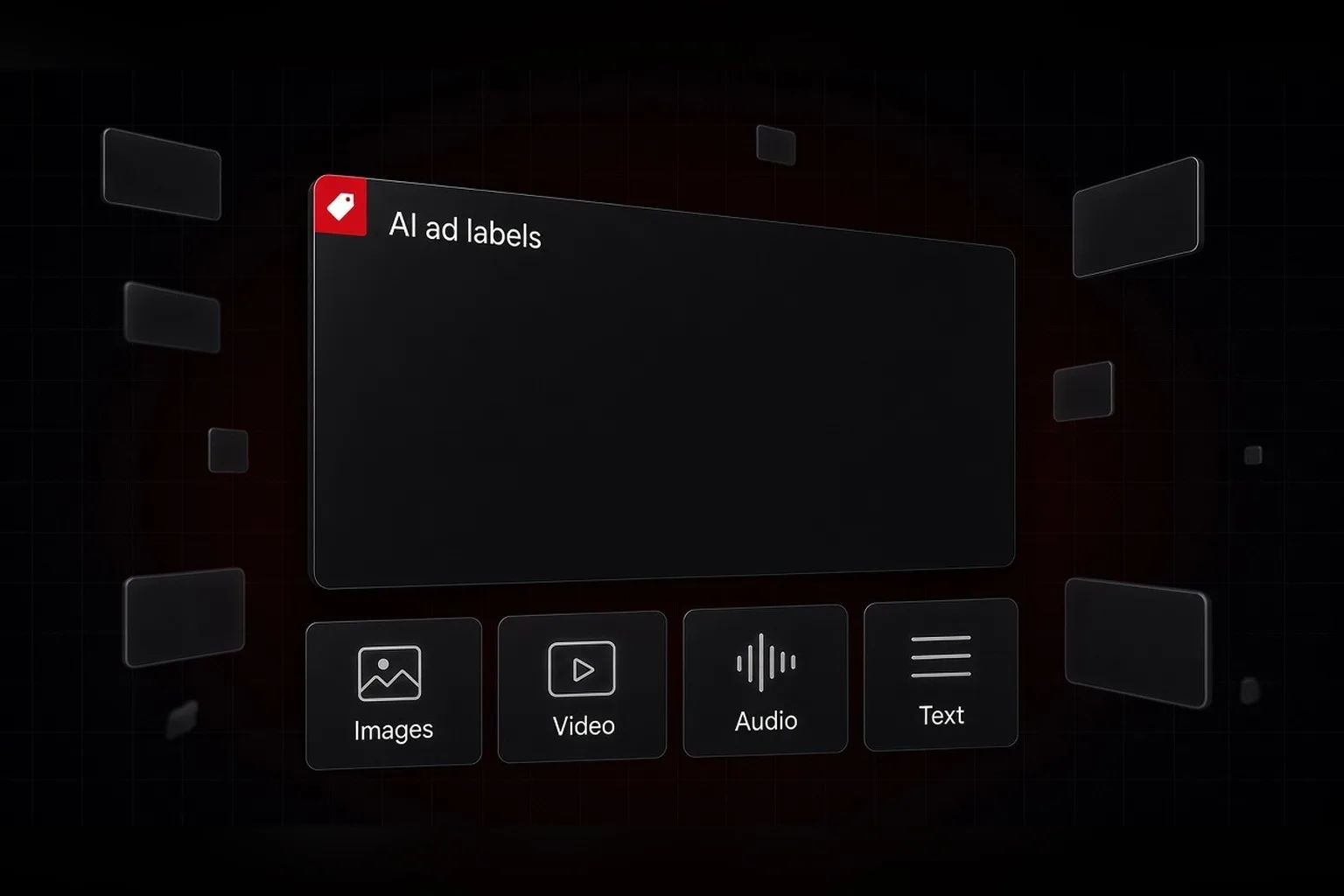
Pennsylvania Governor Josh Shapiro signed the Artificial Intelligence Deceptive Advertising Act. The available account does not provide the exact signing date. The law requires disclosures on advertising generated or substantially altered with artificial intelligence.
The requirement covers still images, video, audio and text. It is not limited to synthetic video or realistic voice imitation. Written and visual advertising can also require a label when AI generated the material or changed it to a significant degree.
The available account does not specify an effective date, penalties, enforcement authority or exact presentation rules for each medium. It also does not identify who is covered or what connection to Pennsylvania triggers the requirement. Nor does it define the boundary between minor AI assistance and a significant modification. Those details will determine what advertisers must review before publishing a campaign.
This is a law rather than a model release, so there are no parameters, benchmark scores, license terms or usage prices to compare. Its practical test is whether people can notice and understand a disclosure in the format where an advertisement appears.
That challenge will vary by medium. A label that works on a static image may not translate cleanly to a short audio spot, fast-moving video or compact block of text.
The law’s defining feature is its medium-wide disclosure rule. Pennsylvania is treating AI generation as a property of the finished advertisement, whether the output is visual, spoken or written. It works like an ingredient label for synthetic media: the requirement follows the final product rather than any single tool used to create it.
Advertising teams covered by the law could need to track AI use throughout production. Agencies, in-house marketing departments and creators may need to establish whether a generative system produced the first draft and whether later edits crossed the significance threshold. That is an interpretation of the operational burden, not a requirement detailed in the available account.
The unresolved threshold has practical consequences. AI can generate an entire asset or revise a small part of existing material. Without a stated boundary in the available details, businesses cannot yet determine which routine editing steps require a label.
Enforcement guidance or implementing rules could therefore matter as much as the statutory requirement itself. Advertisers within the law’s reach may eventually need a way to record when AI materially shaped an ad across all four covered formats. The disclosure appears at publication, but determining whether it applies may require an earlier review of production.
This article is not legal advice.