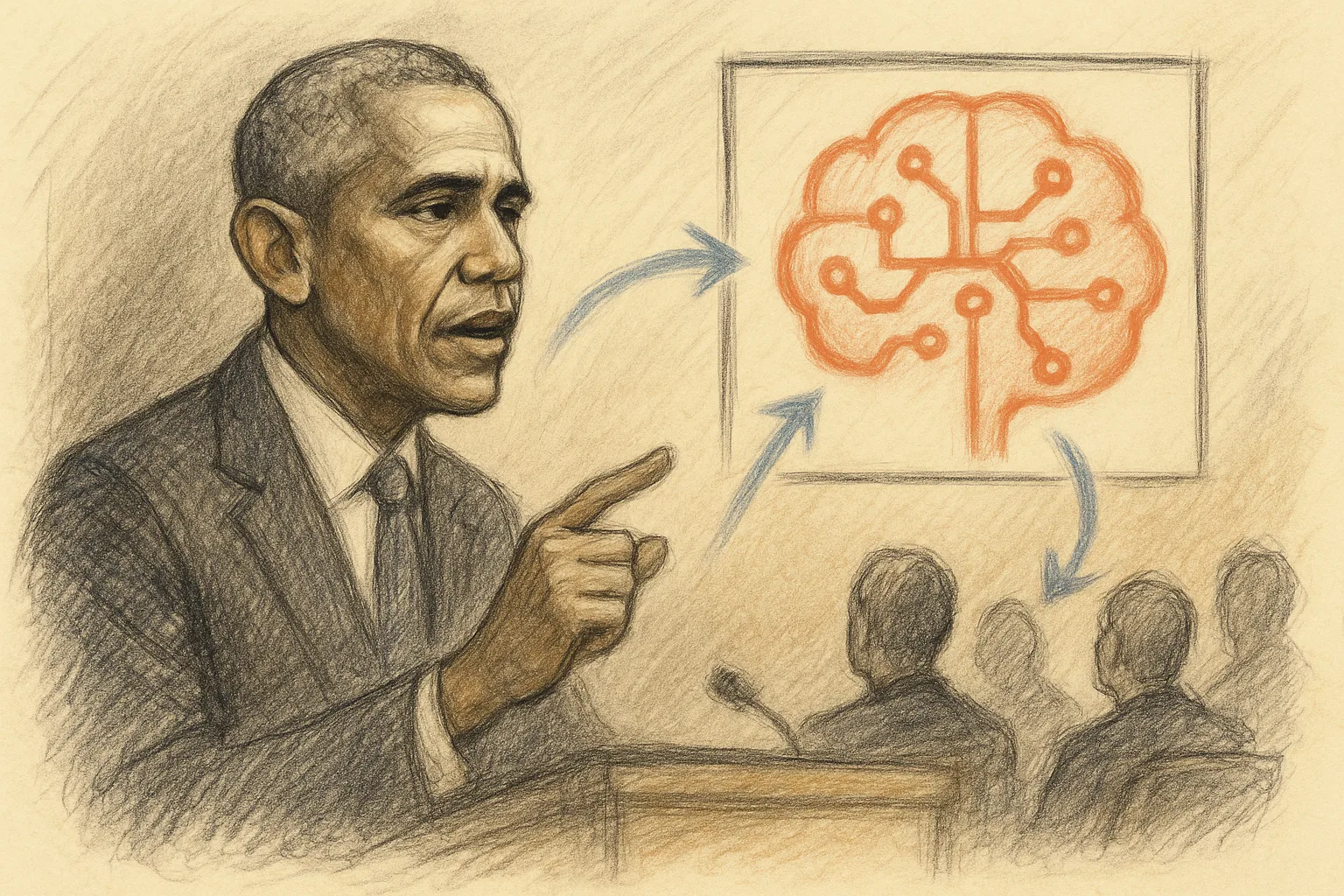
Former President Barack Obama urged Democrats to make artificial intelligence a central policy priority and develop a defined plan for its economic and safety risks, according to a TechCrunch report published September 13, 2026.
Obama made the remarks on Thursday at a Democratic fundraising event, where House Minority Leader Hakeem Jeffries interviewed him, according to TechCrunch’s account of a New York Times report and partial transcript. The report provides no proposed law, regulatory framework or timetable. Its narrower finding is that Obama wants Democrats to treat AI safeguards as a core political issue rather than a secondary technology topic.
This was not a model release. There are no parameters, benchmark results, license terms, technical specifications or pricing details to assess. The reported development is a political intervention about how Democrats should respond to AI, not a product announcement.
Obama’s framing combines two concerns that can produce different policy responses. Economic policy asks who gains or loses as AI use expands. Safety policy asks how risks should be identified and addressed. The source summary does not say which measures Obama favors or how a Democratic plan would convert those categories into specific priorities.
That gap limits what can be concluded. Calling for a plan establishes direction, not design. It is like requesting a building code without identifying which structures it covers or which tests they must pass. The appeal may set an agenda, but it does not tell lawmakers, companies or users what would change.
There is no benchmark comparison in the conventional model-release sense. The relevant comparison is political: Obama’s reported remarks call for AI to move closer to the center of the Democratic agenda. The source offers no evidence about the party’s existing position, so it does not establish the size of any shift or whether Democrats have already adopted related proposals.
The message is directed most clearly at Democratic policymakers and political strategists. Its effect on AI builders, employers and workers will depend on any plan that follows. Rules addressing economic effects could differ substantially from safeguards aimed at technical safety, and the available facts do not show whether Obama expects one framework to cover both.
The immediate implication is limited but concrete. A former president has publicly pressed Democrats to produce a clearer AI agenda covering economic consequences and safety. Until specific proposals, responsible institutions and implementation dates emerge, the remarks remain a call to form policy rather than a policy program.