
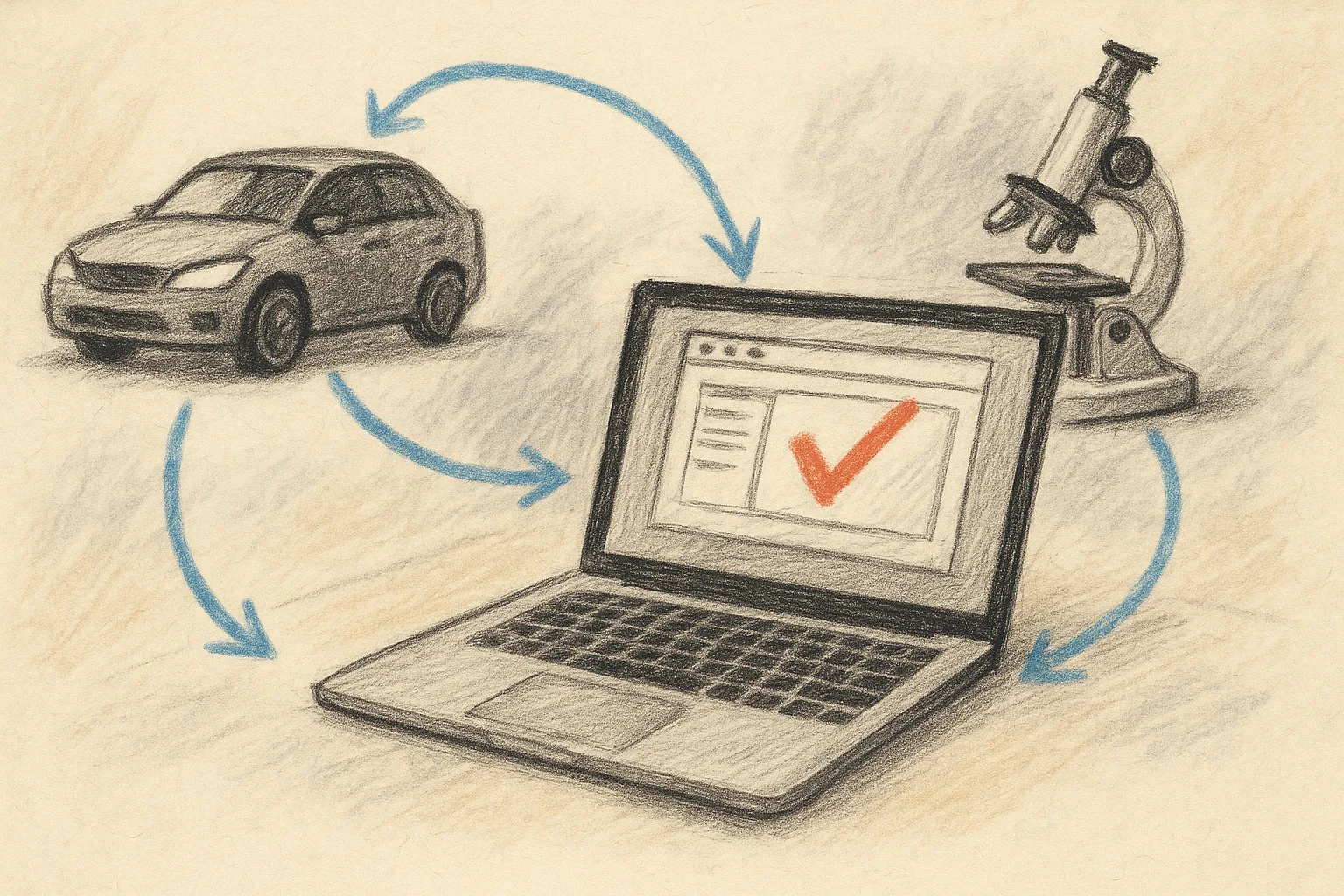
Every website needs maintenance, but the stakes are not the same everywhere. A bank, an insurer or a fund issuer handles sensitive data, publishes regulated information and works under supervisors who expect rigorous data protection. For these firms, website maintenance is part of operational risk management, not an IT chore.
This article explains what maintenance looks like for regulated financial and insurance companies, and why it needs more structure than a standard support plan.
Why regulated firms need a different approach
Without regular maintenance, any website is exposed to security breaches, malware, outages, slow loading and broken integrations. In financial services and insurance, the consequences are heavier:
- client and personal data falls under the GDPR
- a serious incident can lead to reporting duties and questions from supervisors
- outdated or wrong product information, documents or risk wording can mislead clients
- even a minor breach can cause serious financial and reputational damage
In the EU, the Digital Operational Resilience Act (DORA) has applied to banks, insurers, investment firms and other financial entities since 17 January 2025. It sets requirements for ICT risk management, incident reporting, resilience testing and the oversight of ICT third-party providers. A website and the platforms behind it are part of that picture.
What maintenance should cover
Security patching
The CMS, frameworks, plugins, libraries and server software are updated on a fixed schedule, and urgent patches are applied as soon as they are tested.
Access control and activity logs
Every account has only the rights it needs, administrative access is tightly controlled, and logins and changes are logged so that activity can be reviewed.
Vulnerability testing and monitoring
Regular vulnerability scans, monitoring of traffic anomalies and unusual login attempts, and checks for malicious or changed code.
Availability and recovery
Uptime monitoring, daily backups stored in a separate location, and recovery that is tested, not assumed.
Controlled changes
Changes go through review and testing before release, and each release is recorded, so you can show what changed, when and who approved it.
Accurate regulated content
Product pages, documents, fees and risk warnings stay current, and outdated versions are replaced or archived in a controlled way.
Oversight of third-party services
Hosting, CDN, analytics and other services the website depends on are listed and reviewed, so you know which providers support it.
Maintenance does not make a firm compliant on its own
Regulatory compliance is the responsibility of the firm and its compliance team. Good maintenance supports it: it keeps systems patched, produces the records your team needs and reduces the chance of an incident. It does not replace your own risk, legal and compliance processes.
How LabForty approaches it
We work with clients in the financial sector, including fund and ETP issuers, and we design maintenance around the risk level of each platform rather than a generic package. Our approach includes proactive monitoring, regular updates and backups, controlled releases and a fast response to critical issues. You can see how we work with financial clients in our case studies.
For the wider case for maintenance in any business, read why website maintenance is the unsung hero of digital growth.
Ask our team which kind of website support and maintenance suits your firm.
Questions
- What does maintenance add for a financial or insurance website?
- Stronger cybersecurity, access monitoring and activity logs, regular vulnerability testing, and high stability and availability suited to regulated environments.
- How does this relate to general website maintenance?
- Updates, backups, monitoring and performance care remain the shared baseline. This article positions those practices for finance and insurance compliance; the general maintenance guide explains the baseline in full.
- Where can we see LabForty's work with financial clients?
- Our case studies describe how we work with financial clients.
Tell us what the site must protect, whether that is client records, regulated workflows, or uninterrupted access.