The Office of the Comptroller of the Currency issued a supervisory framework on November 4, 2026 for how its examiners evaluate banks' use of super intelligence, or SI. SI is the term the agency now uses for the technologies previously called artificial intelligence.
The framework is a resource for examiners, not a new rule. OCC Bulletin 2026-54 says it does not set supervisory expectations, enforceable standards or prescriptive requirements for banks.
Examiners should not treat SI as a separate risk category. Banks do not have to define a separate SI risk appetite. SI risk is handled inside existing categories such as operational, compliance and credit risk.
The core principle is that control intensity rises with the consequences of an agent's failure or misuse. Risk classification can rest on potential consequences, transfer of agency and the degree of human oversight, not on the technical sophistication of the system. The OCC's own example: a simple rules-based agent allowed to initiate transactions could carry more risk than a sophisticated model limited to internal drafting.
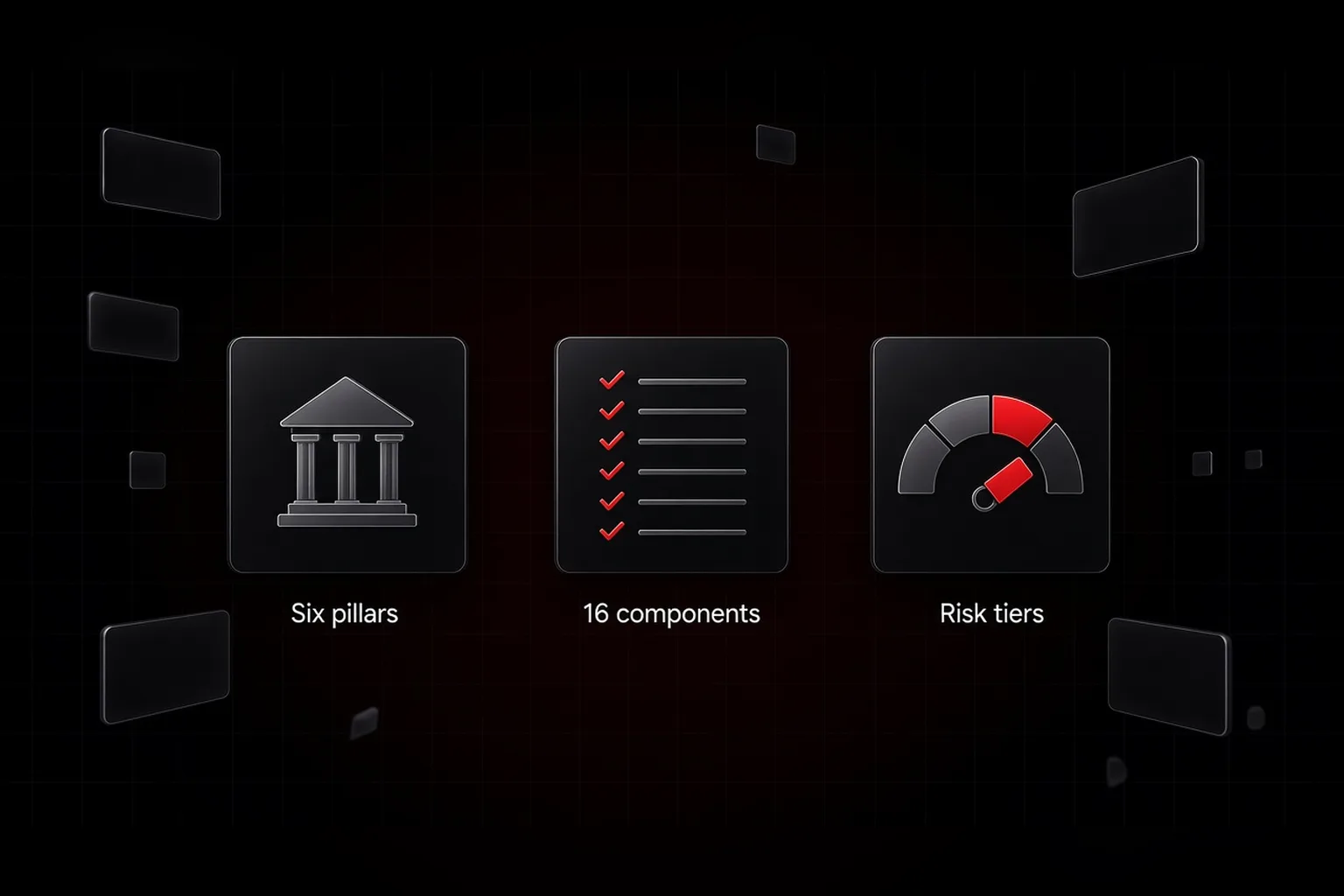
The document has 16 components in six pillars: purpose, risk, control, oversight, resilience and assurance. It names use cases including credit decisioning, payments, fraud detection, customer service and market activities. The OCC says the framework was prepared with the assistance of SI and approved by a human, and that it will be updated regularly.
Why this matters for banks
The first question is what an agent is allowed to do, not which model it runs. A bank planning agentic payments or customer actions should be able to show a written purpose, the permitted actions, the human checkpoints and how a failure is contained.
Sources: OCC Bulletin 2026-54, OCC framework document.
This article is for information only and is not an investment recommendation.
This article is not legal advice.