
The Dutch cabinet agreed on November 6, 2026, on a proposal from State Secretary Aerdts for the Digital Economy and Sovereignty, to adopt a national AI vision titled Kiezen voor AI voor iedereen (Choosing AI for everyone).
The government says it will not wait for the technology to set the direction. The aim is a stronger Dutch and European position in AI, more room to develop and apply it, and more control over the effects on people and society. The Netherlands, it says, cannot lead on every part of AI, so it will focus where economic opportunity meets public need, naming healthcare, energy, food production, security and high-tech industry. The goal is not full independence, but enough of its own knowledge and capacity to keep access to important technology and to keep making its own choices.
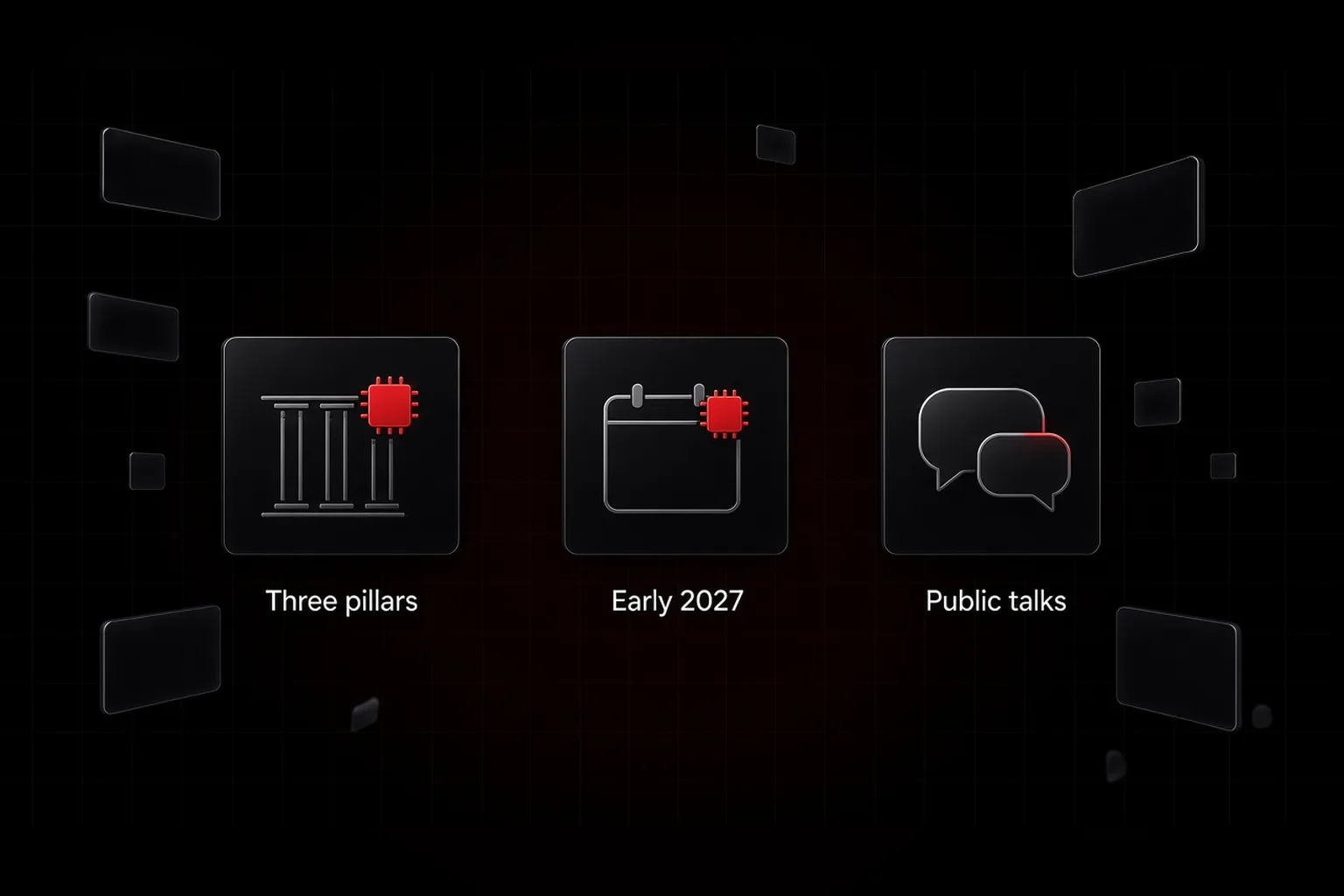
The vision rests on three pillars: responsible development and use of AI, access to advanced AI technology and security, and steering the AI transition in line with public values.
Under the first pillar, the cabinet wants Dutch AI firms to grow more easily and wants AI applied faster, and with care, in business and in government. It is working on a broader approach to data centres, and in early 2027 it will publish a more detailed plan for the AI infrastructure and computing capacity the country needs. It also wants to remove barriers that stop smaller firms from using AI, share successful public-sector uses more widely and buy more jointly so that not every public body builds the same thing alone.
Under the second, the cabinet wants the country to keep access to the best AI technology and to be better protected against growing security risks, including more advanced cyber attacks, disinformation and over-dependence on a small number of foreign firms. It will decide which technology and infrastructure the Netherlands and Europe should hold themselves, and where work with trusted partners is enough. It is also examining the possible creation of a Dutch AI safety institute.
Under the third, the cabinet points to the EU AI Act as the rulebook for safe use and for bans on unacceptable-risk systems, and says it will help companies and public bodies apply those rules, including through supervised experiments. It will work with the media sector on a Mediapact covering reliable information and the use of journalistic content by AI. People will be able to join discussions on the opportunities and limits of AI in 2027 and 2028.
Why this matters
This is a national direction, not a new statute. The dates that can be planned around are early 2027 for the infrastructure and compute outline, and 2027 and 2028 for public consultation. Firms that sell or run AI in the Netherlands should watch both, and should treat the EU AI Act, not this vision, as the binding rule set.
Sources: Dutch government announcement.
This article is not legal advice.