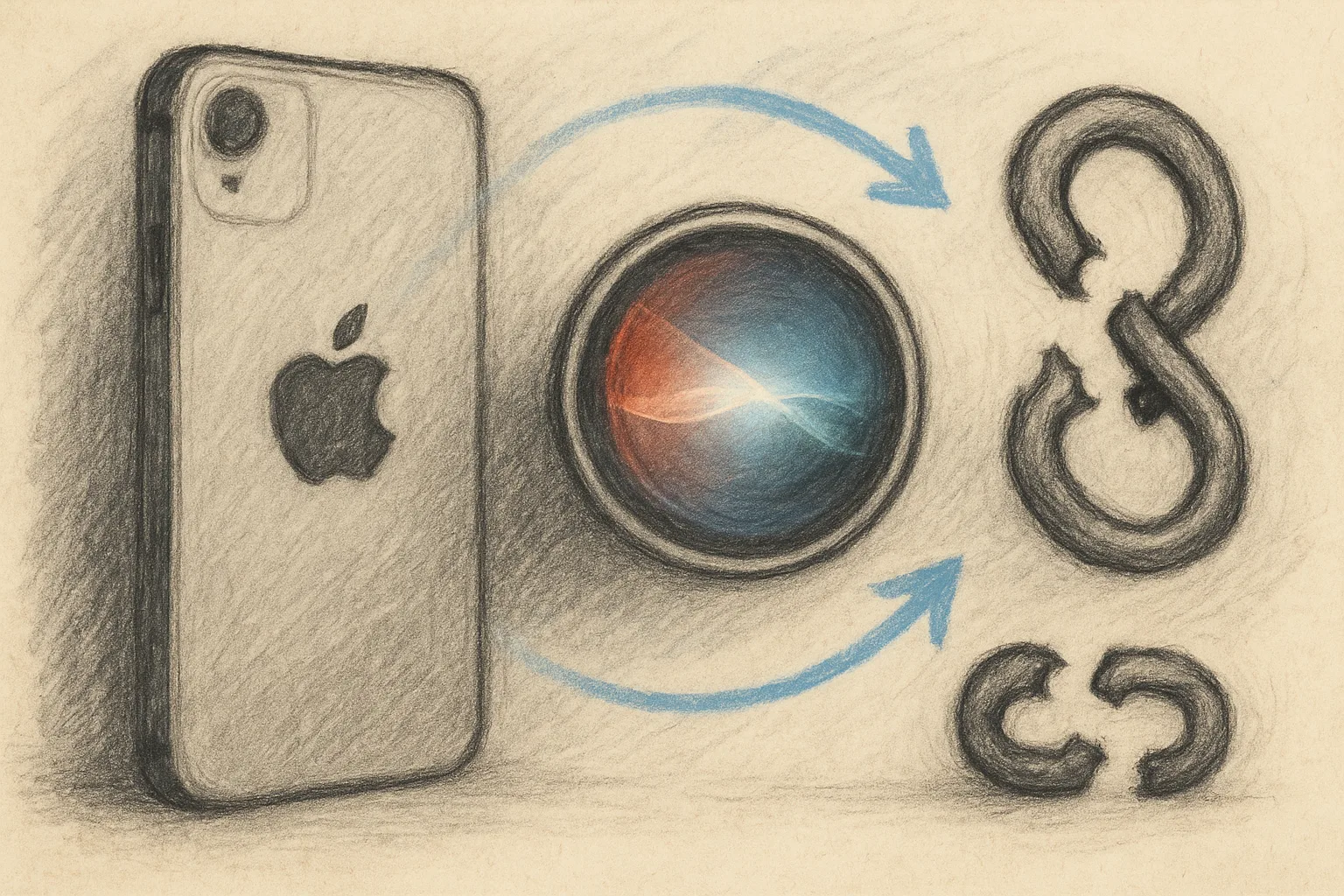
Apple released iOS 27 and macOS Golden Gate 27 on September 14, 2026, adding Siri AI updates and refining the Liquid Glass interface. macOS Golden Gate 27 also marks the final macOS version that will support Rosetta for Intel apps.
This is an operating-system release, not a disclosed foundation-model launch. Apple did not provide model parameters, benchmark scores, licensing terms or separate AI pricing in the available release details. There is no supplied evidence of faster inference, better accuracy, longer context or lower operating costs, so credible comparisons with standalone models or the previous state of the art are not possible.
Apple is putting AI changes inside products already used through iOS and macOS rather than framing the release around published tests or technical specifications. The practical measure is whether Siri becomes more useful in routine interactions without making the operating system harder to navigate.
Liquid Glass received refinements rather than a named replacement. Apple provided no specific visual changes or interface measurements, leaving the scope unclear. Its placement alongside Siri AI connects interface design with AI behavior as parts of the same software experience.
Rosetta has the clearest immediate consequence. macOS Golden Gate 27 is the last version that will support Rosetta for Intel apps, making it the final bridge for software that still depends on Intel compatibility. A bridge with a closing date changes planning before it closes. Users and organizations must identify dependent applications, while developers must decide whether continued Mac support justifies updating them.
The release affects two main groups. iPhone and Mac users will encounter Apple’s latest Siri and interface changes. Mac developers, IT teams and specialist users must also assess workflows that still include Intel applications. For that second group, compatibility may matter more than the headline AI features.
The Siri label is not evidence of a new model architecture, training method, modality or context window. Apple specified none of those technical details. The narrower conclusion is the supported one: iOS 27 and macOS Golden Gate 27 deliver product-level Siri AI changes, but the announced facts do not quantify any underlying model advances.
The concrete next step is an Intel-app inventory before moving beyond macOS Golden Gate 27. Every application that still relies on Rosetta now has a defined final supported macOS release, turning a future compatibility concern into a current migration decision.