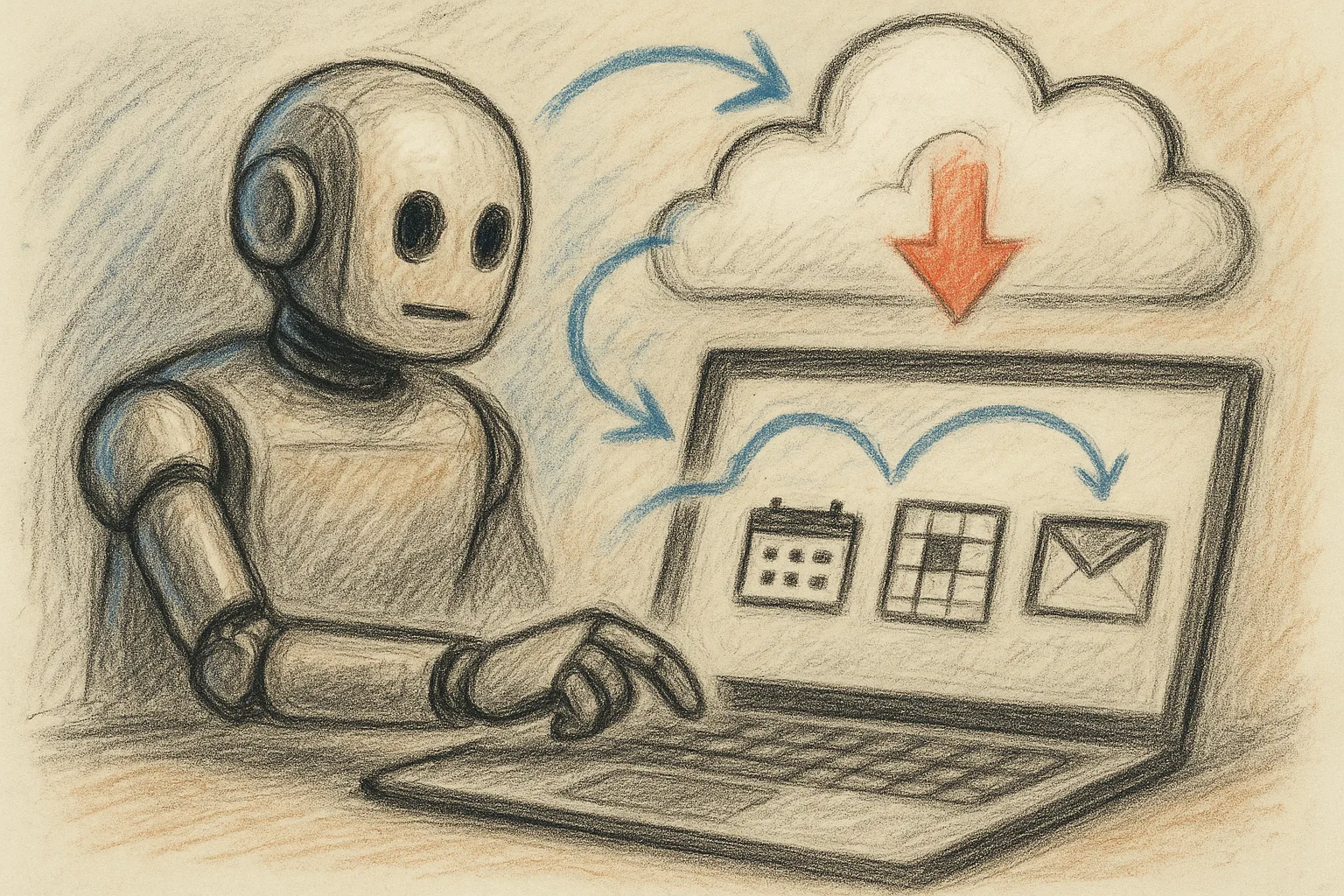
Grok is no longer waiting in a chat tab. xAI released Grok Bot in beta on August 12, 2026, giving users an always-on agent that carries out workplace assignments inside a cloud-based computer environment. A user sends instructions from a phone or desktop, and the bot works until the task is finished or requires approval.
That changes the basic exchange. Users are assigning a process, not asking for an answer about one. The real test is whether Grok Bot can move across tools, preserve the right context and pause when a decision requires human judgment. Convincing text is not the same as completed work.
xAI has not disclosed Grok Bot’s parameter count, model architecture, context-window size, training method or license. It has also published no benchmark scores, completion-rate data or direct evaluations against competing business products from OpenAI, Anthropic or Microsoft. There is no numerical basis yet for claiming Grok Bot is more capable.
Access is also narrower than the AI teammate framing implies. The beta is available on desktop and iOS to SuperGrok Heavy, Cursor Ultra and Cursor Teams Premium subscribers. The report lists no standalone Grok Bot price. Teams and enterprise customers can join a waitlist for later access.
The notable technical feature is orchestration, not a newly documented foundation model. Multiple bots can work simultaneously, including an arrangement where one supervises others handling specialized parts of a project. xAI says agents can share relevant context, coordinate through group chats and decide which bot owns each task. The company says an internal prototype has already handled sales outreach, marketing, office operations and software bug fixes.
Think of Grok Bot as a small contractor team sharing an office and computers, not another chatbot tab. The analogy points directly to the risk. Autonomy depends on which accounts the agents can enter, what they can change and when they must request permission. Approval checkpoints carry more weight when software is executing workplace tasks instead of generating text.
Grok Bot is designed to remember how a user works. xAI says bots can save workflows, retain context about working styles, resume tasks from earlier conversations and return to abandoned threads. The company also expects the agents to become more proactive over time.
For builders, that could reduce the need to define every workflow in advance. The cost is predictability. Once an agent starts deciding which work needs attention, users also need confidence that it is choosing correctly and knows when to stop.
The clearest fit is repeatable work spread across multiple applications, including outreach, marketing coordination, operational administration and bug-fixing processes. Grok Bot offers less to buyers who require published accuracy measurements, deployment controls or a clear technical specification before connecting an agent to company systems. The beta proves availability, not comparative performance.
Before enterprises grant Grok Bot access to business accounts, what evidence will xAI publish that its agents complete multi-step work reliably and request approval at the right moment?