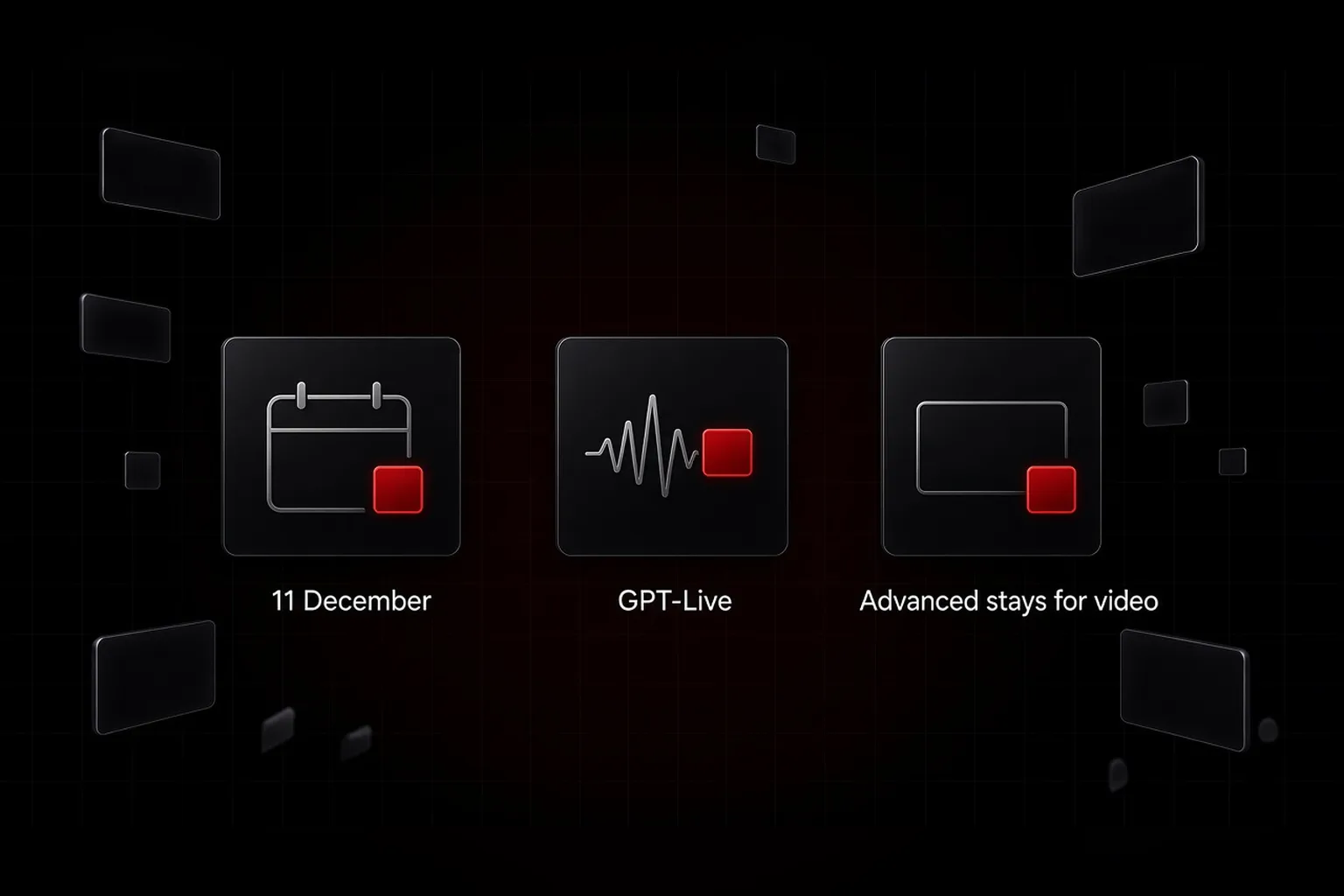
OpenAI's Help Center says Advanced and Standard Voice will be retired from ChatGPT Voice on December 11, 2026. Users were notified on November 10, 2026. Until the retirement date they can keep using those modes. After December 11 they will no longer be able to select Advanced or Standard Voice in Settings, Voice, and anyone who still had them selected will be defaulted to Live voice.
Live voice is powered by GPT-Live, which OpenAI introduced in July 2026. OpenAI describes GPT-Live as a full-duplex model that can listen and speak at the same time, mark that it is following along, and hand complex or agent tasks to frontier text models while the conversation continues. OpenAI says that since the July launch, voice usage has nearly doubled, and that virtually all people using voice in ChatGPT now use GPT-Live.
Advanced Voice was a turn-based audio model that waited for the user to stop speaking before it replied. Standard Voice chained speech-to-text, a language model and text-to-speech, which OpenAI says led to slower replies and lost information between voice and text. Conversations remain in ChatGPT history and can continue in text or voice after the change.
Two exceptions are stated clearly. Live video and screen-sharing will continue to be powered by Advanced Voice until GPT-Live has that capability. Voice with custom GPTs will also keep using Advanced Voice until those custom GPTs are themselves retired on December 11, 2026.
Why this matters
The switch comes 21 days after this week's Friday slot. Anyone who still depends on Advanced Voice for a particular style of reply has until December 11 to record how it behaves and to test GPT-Live on the same tasks. Video and screen-sharing are not moving on that day, so a workflow that mixes voice with a shared screen will sit on two different models for a time.
Sources: OpenAI Help Center.
This article is not legal advice.