Anthropic plans to add machine-readable marks to text and images generated by supported Claude models, but the labels are not active across existing Claude products yet. The global rollout is intended to meet EU AI Act transparency obligations. New models will include the marks when released, while Anthropic continues work on models already in use, according to The Verge.
The source does not reproduce the legislation’s statutory wording. Anthropic says: “Generated text will carry embedded watermarks, and generated files will include digitally signed provenance metadata where supported.” Readers will not see the marks. Software, platforms and other third parties are supposed to detect them.
The immediate regulatory burden sits with Anthropic as the model provider. Its commitment covers supported models across Claude Platform, the Claude API, Claude, Claude Code, Claude Cowork and Claude Tag. Text generated through AWS, Google Cloud or Microsoft Foundry will also carry the watermark because Anthropic plans to apply it at the model level, not only inside its own interfaces.
That choice determines whether the label travels. A mark attached only to a website can vanish when someone copies the output. Anthropic says its text watermark will be woven into generated language, allowing it to move with copied text and potentially survive some editing. It is a maker’s thread inside fabric, not a sticker on the packaging: less visible and potentially harder to lose, but not indestructible.
Compliance will use two technical methods:
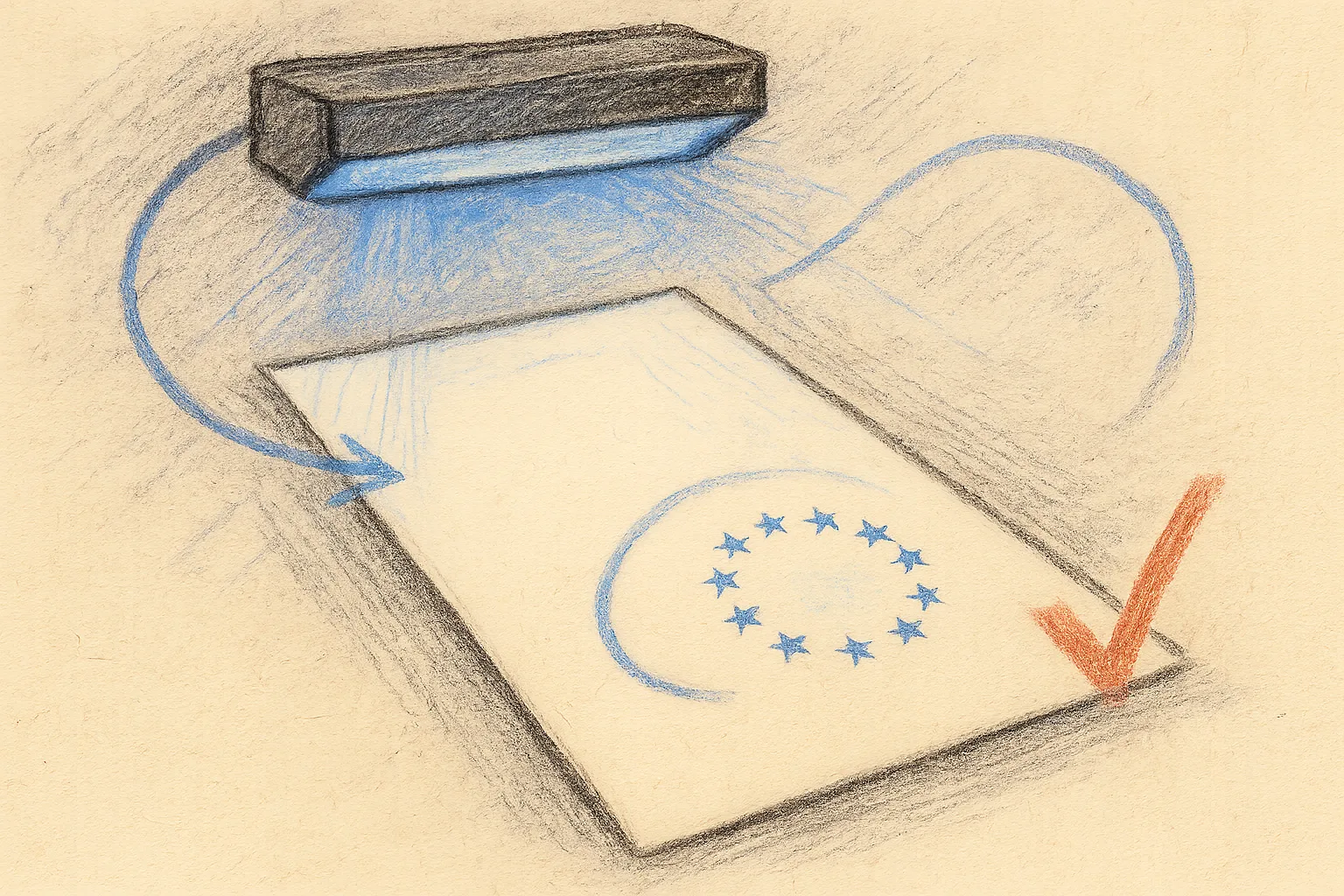
- Supported image files processed by Claude will receive C2PA provenance metadata. Adobe, OpenAI and Google also use the C2PA standard.
- Generated text will contain an imperceptible watermark intended not to alter its meaning, quality or readability. Anthropic has not identified the underlying watermarking system.
Anthropic is developing tools for users and third parties to detect both forms of marking. Technical documentation and detection details are still pending.
The rollout applies globally, although EU regulation is driving it. That spares Anthropic from maintaining one provenance system for Europe and another for other markets. Developers using Claude through cloud partners should also eventually receive marked output without adding a separate watermark at the application layer.
The timeline separates active requirements from unfinished work:
- August 2, 2026: the relevant EU AI Act labeling and transparency obligations became applicable.
- Existing AI products released before that date received a four-month compliance grace period.
- August 11, 2026: The Verge reported Anthropic’s commitment and the continuing work on existing Claude models.
- Future Claude models will include marking from their first day of release. Anthropic has not provided a model-by-model rollout schedule or a date for its detection tools.
Persistence is the weak point. C2PA metadata can be removed, including accidentally when platforms process uploaded media. Anthropic also acknowledges that a missing mark cannot prove content was made without generative AI. A surviving mark can provide provenance evidence. Its absence cannot certify that a person created the content.
Will platforms preserve and expose Claude’s marks reliably enough for the EU transparency rule to change what users can actually verify?