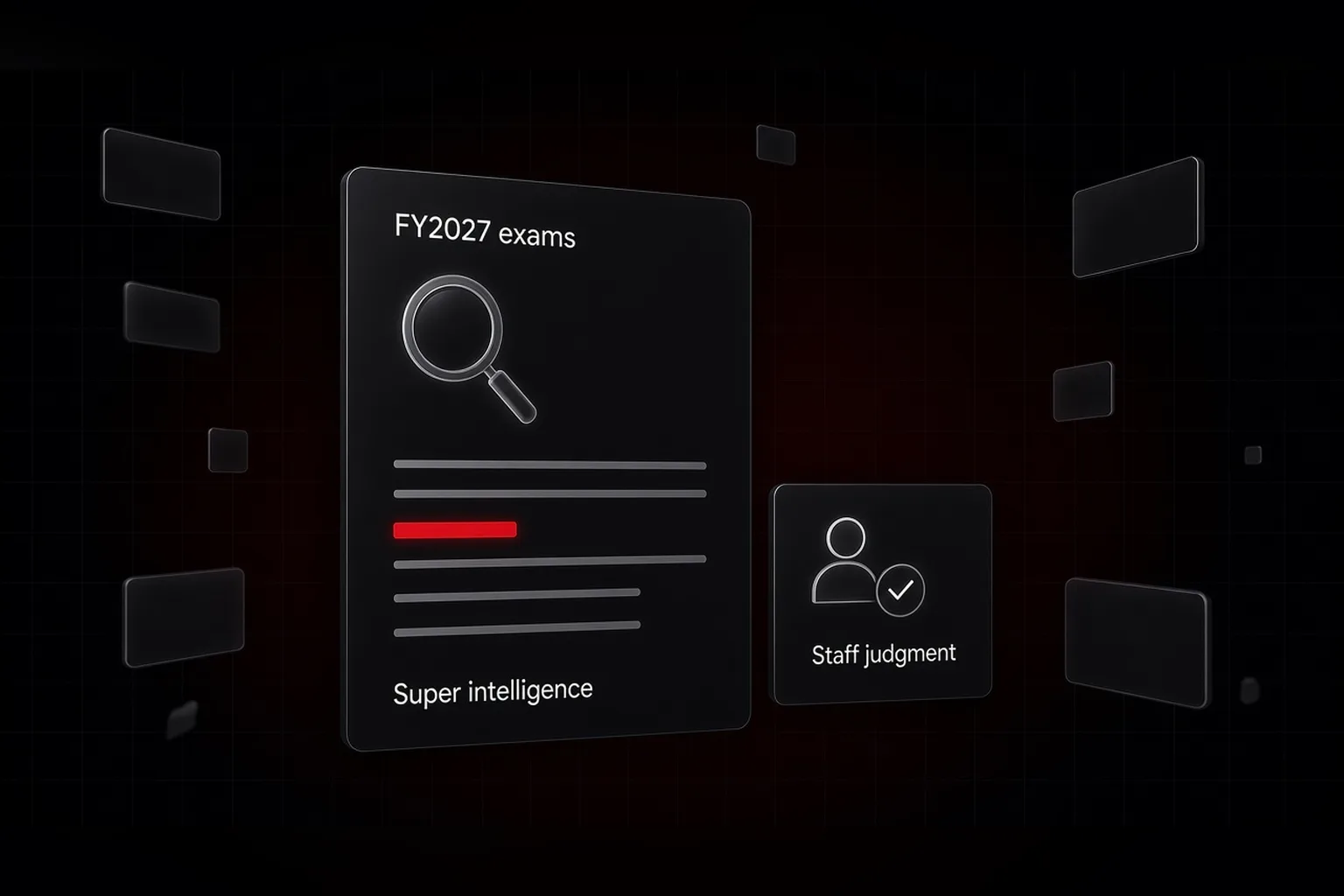
The U.S. Securities and Exchange Commission published its Division of Examinations priorities for fiscal year 2027 on October 23, 2026. Among the areas of focus are "emerging technologies, including super intelligence and other advanced technologies that may affect market operations, compliance, fraud prevention, and investor protection," according to the SEC press release.
"Super intelligence" is not a new class of technology. Law firm Proskauer notes that Executive Order 14434 directs federal agencies to use the term in place of "artificial intelligence" and defines it as the technologies already covered by the statutory definition of AI. In an SEC document, SI means AI.
The priorities apply to more than 34,000 registrants, including investment advisers, investment companies, broker-dealers, clearing agencies and transfer agents. According to Proskauer's reading of the full report, technology topics include SI-enabled phishing, deepfakes and identity theft, and the policies firms use to monitor SI in their own operations. Unlike last year, the priorities do not specifically call for reviewing the accuracy of firms' representations about their AI capabilities.
The bigger change is on the SEC's side. The report describes the Division's plan to use SI in its own risk assessment and examinations, including an examination projection model to improve risk-based resource allocation. It does not name tools or dates. The Division says SI will be "supplementing, but not replacing, staff judgment." Proskauer also reports that the SEC's new Exam Handbook states staff do not consent to recording, transcription or SI note-taking tools.
"Examinations are one of the Commission's most important tools for promoting compliance with the federal securities laws and helping protect investors," said SEC Chairman Paul S. Atkins. The Division adds that the list is not exhaustive and may change during the year.
Why this matters for banks and fund issuers
If examiners can read more of a document production and connect it across files, gaps between disclosures, written policies and actual practice become easier to find. Proskauer adds that firms using AI for pre-exam compliance testing should decide how findings are reviewed and recorded, since a tool-generated list of issues may itself be requested.
This article is for information only and is not an investment recommendation.
This article is not legal advice.