NVIDIA announced Rubin HPC at the SC26 supercomputing conference on 16 November 2026. It is a new GPU in the Vera Rubin platform, built to speed up simulation and data processing for science, engineering and analytics.
What is new
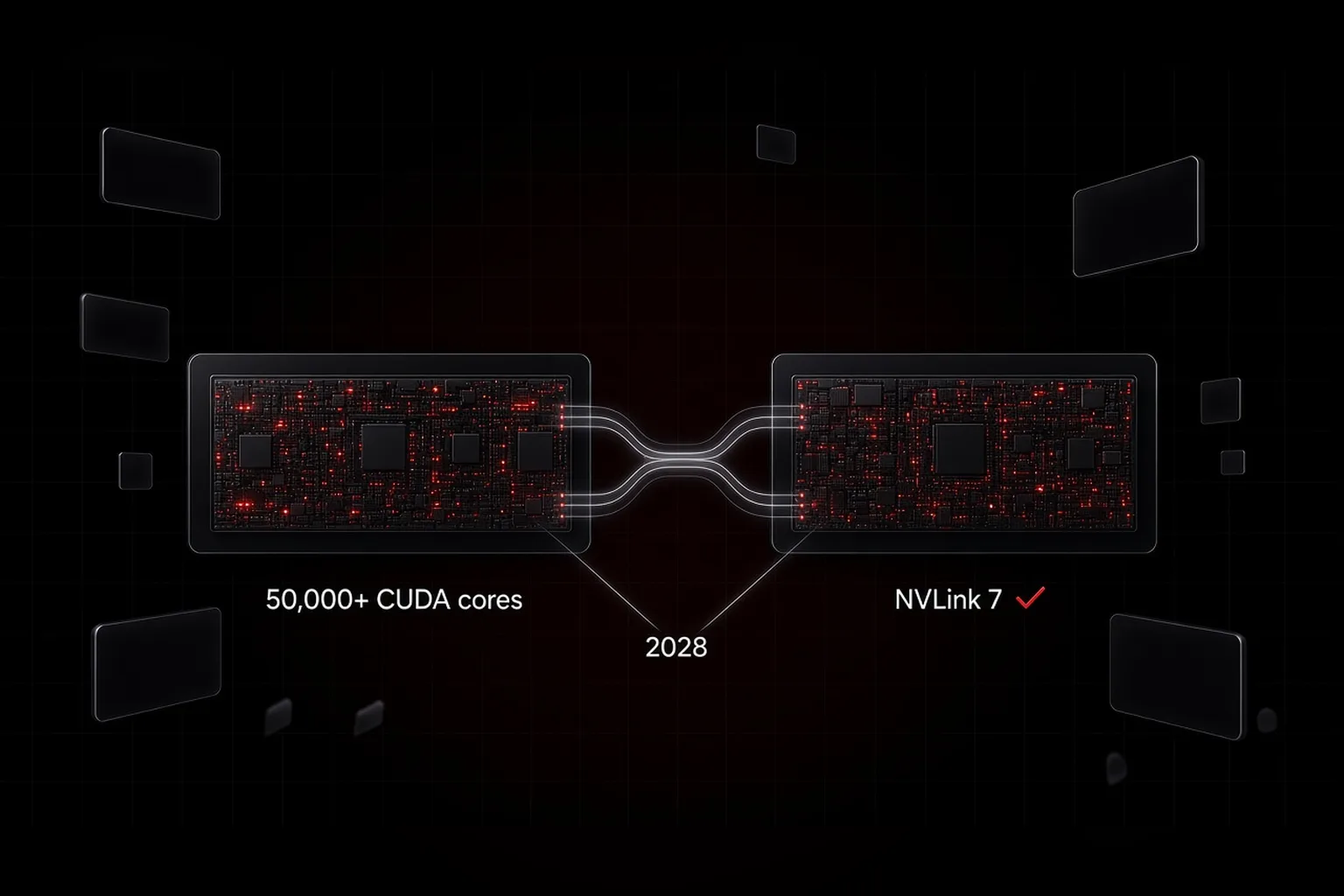
NVIDIA says Rubin HPC has more than 50,000 CUDA cores on a single GPU, a record for the company. It adds a sparse data acceleration feature meant to keep those cores supplied with data, and uses seventh generation NVLink for GPU to GPU connections.
NVIDIA describes the design as balanced: it scales data movement together with compute, instead of adding compute alone. The target is the pattern common to climate models, engineering simulation, genomic analysis and financial risk work, where an application gathers scattered values from a large dataset, calculates and repeats. NVIDIA names sparse matrix operations, stencil computations, sorting and reductions.
The agent angle
NVIDIA ties the chip to AI agents that help researchers test more candidate materials, molecules and designs. Each idea still needs a simulation, so faster simulation shortens the loop of hypothesis, simulation and refinement. NVIDIA's CUDA-X libraries give agents optimised versions of these algorithms.
Availability
Rubin HPC is expected to be available in 2028. The announcement gives no memory size, power figure or price.
Why this matters
Banks and insurers that run risk simulations on GPUs now have a named 2028 option aimed at their kind of workload, not at model training. With no memory, power or price figures yet, it is a planning signal for 2028 budgets, not a buying decision.
Sources: NVIDIA announcement.
This article is not legal advice.