
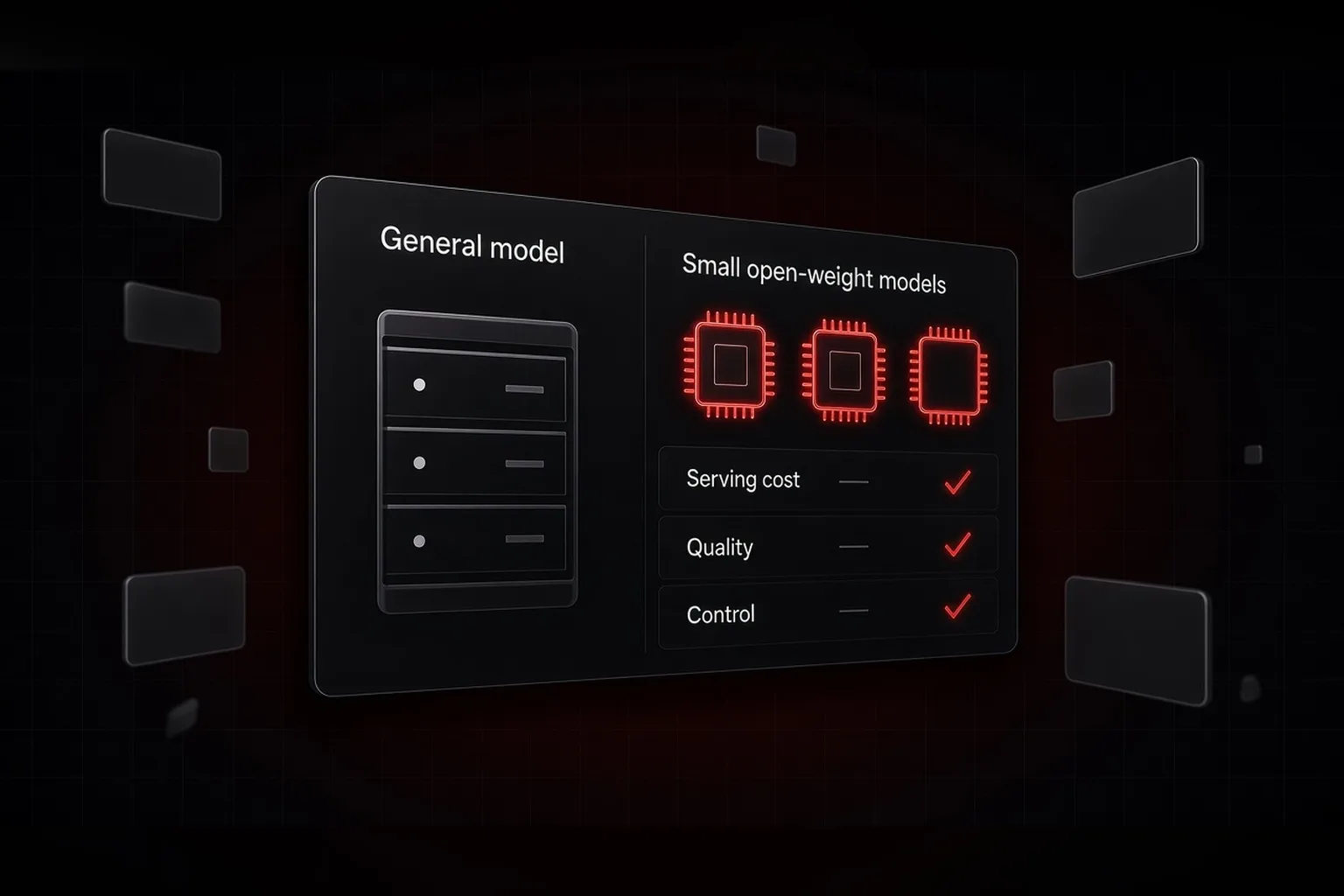
Banco Santander says smaller, specialised AI models have cut serving costs from around €5 per interaction to about €0.03 in selected experimental use cases, the bank announced on October 19, 2026, alongside a new three-year collaboration framework with NVIDIA.
Santander AI Lab runs the work and tests AI before wider rollout. To choose models, the bank built Model Arena to evaluate open-weight models against banking tasks and pick the right model for each workload, then specialises models with NVIDIA NeMo Customizer. For structured data it uses NVIDIA Kumo, a family of open-weight foundation models that turn tabular data into predictions.
Serving runs inside Santander's own architecture on NVIDIA Dynamo-Triton, which the bank credits for the cost reduction. In one experimental customer-service case, it reports better conversation quality and costs down by more than 50% after moving to a more efficient model. Think of it as swapping one general contractor for specialists: each does less, but does it better and cheaper.
These figures are Santander's own and come from experimental use cases, not bank-wide production. Missing from the release: the tasks, the baseline model and how conversation quality was scored. Its next phase covers foundation models, AI agents, fraud and anti-money laundering, real-time decisioning and a banking digital twin.
Why this matters for banks and fund issuers
What matters is the method more than the vendor: test several open-weight models on your own tasks, tune the best one on your own data and serve it on infrastructure you control. Smaller banks and fund issuers can follow the same path at their own scale, with cost per answer tracked from the first pilot (see how LabForty sets up local AI around your boundaries). Santander has not said when the experimental use cases will move into wider production.