
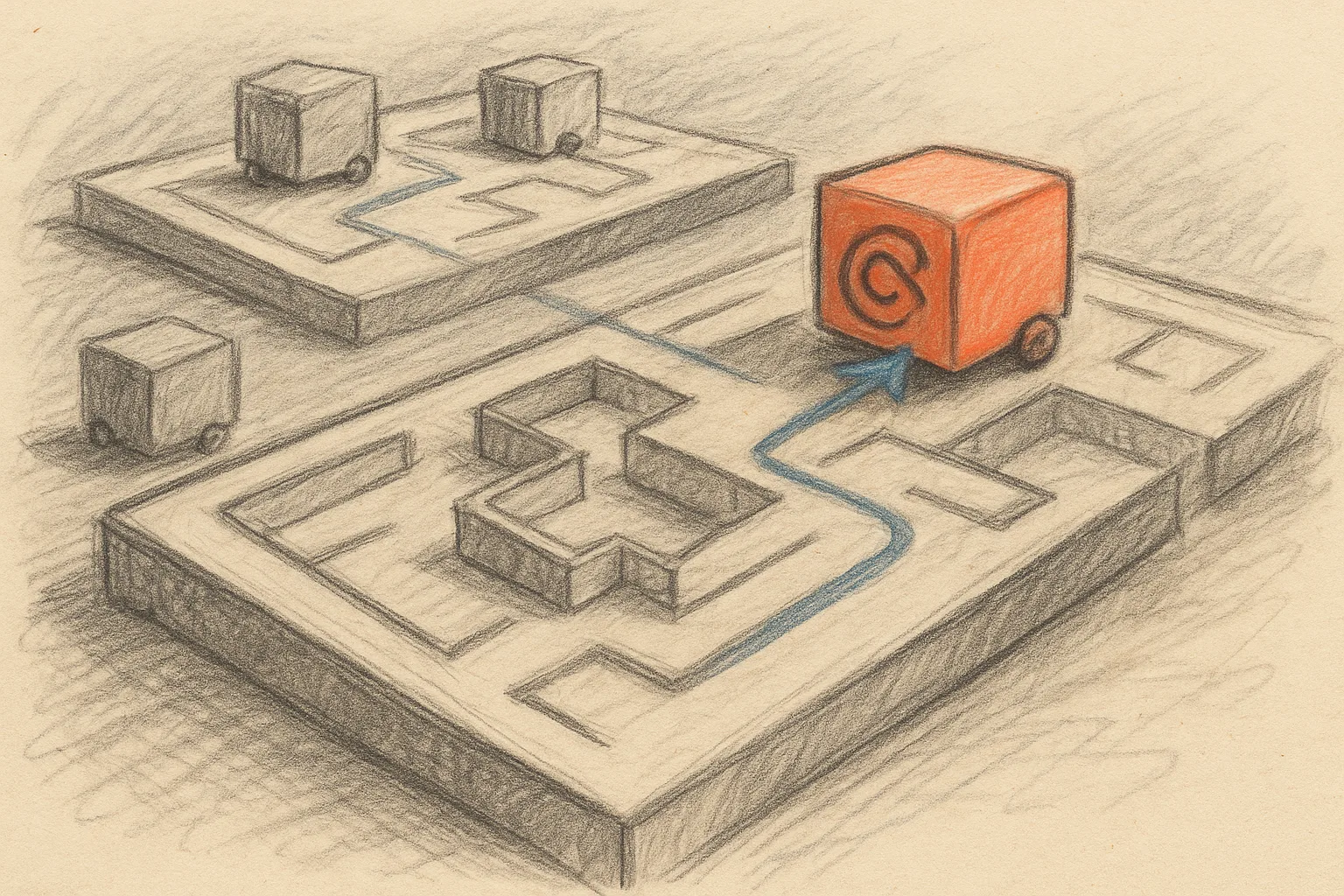
The leading indicator: Qwen3.8 Max now ranks as the best overall model in the agentic index highlighted by an Artificial Analysis comparison. The lead signals a larger market shift: model competition is moving past chat quality and toward multi-step, economically useful work.
That changes what counts as a strong model. Answering isolated questions is not the same as producing a spreadsheet, presentation or memo across a long workflow. Agentic testing is closer to giving a new employee an unfinished project than handing a contestant a quiz. Planning matters. Execution matters. Reliable delivery matters.
The data behind it: Artificial Analysis defines agentic performance as real-world work measured with an Elo-based score. Its broader Intelligence Index v4.1.1 combines nine evaluations: GDPval-AA v2, τ³-Banking, Terminal-Bench v2.1, SciCode, Humanity’s Last Exam, GPQA Diamond, CritPt, AA-Omniscience and AA-LCR.
The latest revision updates τ³-Banking to version 1.0.1. It also switches the grader for Humanity’s Last Exam, AA-LCR and AA-Omniscience to GPT-5.6 Luna at its medium setting. That matters now because rankings can change for two reasons: better models or different measuring equipment. Version numbers and grader choices belong next to the result, not buried below it.
The supplied page does not give Qwen3.8 Max’s score, confidence interval or margin over the next model. Nor does it show a model-by-model breakdown of which tasks created the lead. The ranking is a useful signal, but the available evidence cannot show whether Qwen’s advantage is decisive or narrow.
Who benefits and who loses: Qwen now has a stronger argument for inclusion in procurement tests, particularly when buyers need agents to finish business workflows rather than generate short responses. Providers competing mainly on reputation face pressure to prove performance on specific tasks.
Buyers gain a framework that compares intelligence, cost, speed and endpoint performance instead of reducing every decision to one headline score. The providers at risk are those whose deployed endpoints retain less of a model’s reference quality.
Artificial Analysis measures endpoint quality separately by rerunning BFCL v4-500, HLE-250 and AA-LCR-25. It says performance can drop because of quantisation, sampling defaults or other endpoint configurations. The name on an API can matter less than the version customers actually receive.
The competing narratives: The bullish case is that agentic rankings better reflect commercial value because evaluations such as GDPval-AA v2 cover economically valuable tasks across occupations. The counterargument is that no composite index can represent every deployment. Artificial Analysis itself notes that particular evaluations may matter more for particular use cases.
Capability also pulls against reliability. AA-Omniscience rewards correct answers, penalises bad guesses and does not penalise refusal. Its scale runs from -100 to 100, with zero representing equal numbers of correct and incorrect answers. A model can attempt more work and appear productive while adding costly errors. Any agentic lead therefore needs to be checked against hallucination performance.
What to watch next: The unanswered questions are the size of Qwen3.8 Max’s lead, its results by evaluation, cost per task, execution time and whether provider endpoints match the tested reference quality. Those numbers will decide whether this ranking changes purchasing decisions or remains a benchmark milestone.
Will Qwen3.8 Max keep its lead once buyers compare task-level results, cost and deployed endpoint quality?