
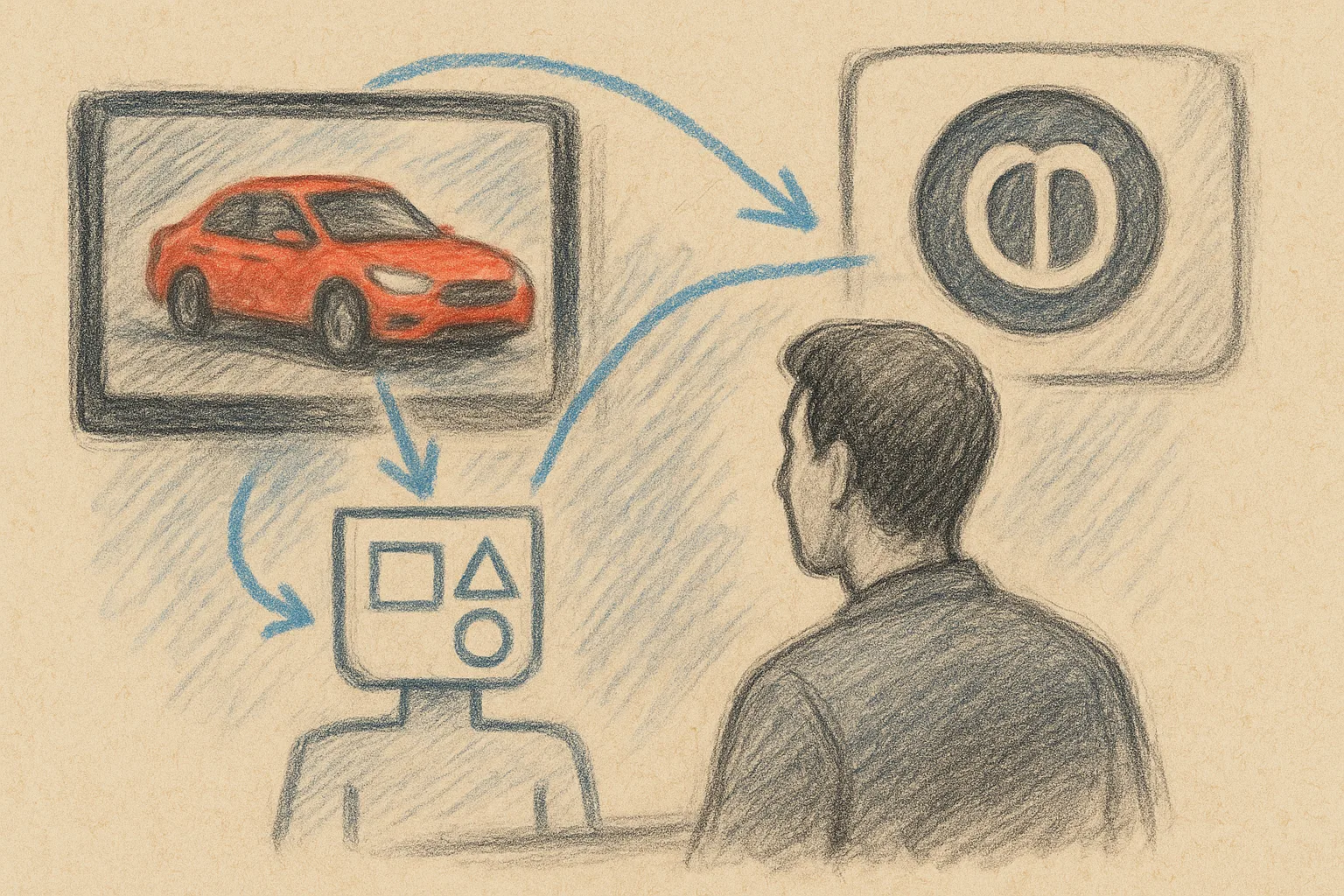
Google has outlined a concept for Gemini: agentic video understanding. Google DeepMind published a discussion of agentic video understanding in Gemini on September 1, 2026. The stored record confirms the introduction and its timing, but not a new model, API or generally available product.
The gaps prevent this from being assessed as a model release. The supplied material gives no parameter count, benchmark score, context length, license, price or availability date. It names no Gemini model tier and does not say whether the capability targets consumers, developers or enterprise customers. Any firmer claim would exceed the available evidence.
Performance is also unknown. Google’s headline makes agentic video understanding the central development, but the stored facts provide no evaluation results or baseline from an earlier Gemini system or competing model. Without a named dataset, scoring method and comparison point, there is no way to tell whether this advances the prior state of the art or repackages an existing capability.
The mechanism remains unresolved too. The term “agentic” suggests a system that can take multiple steps while working with video instead of producing one response to one prompt. Think of the difference as a video catalogue versus a researcher: the catalogue retrieves what is indexed, while the researcher decides what to inspect next. The supplied source does not show whether Gemini uses tool calls, iterative search, memory, frame selection or another mechanism.
That uncertainty gives builders a practical test for future documentation. Developers working with long recordings, video archives or workflows requiring several inspection stages could be the natural audience if Google confirms those functions. Actual suitability will depend on supported inputs, output reliability, latency, usage limits and access method. None can be inferred from the announcement headline alone.
The timing suggests Google wants agentic behavior and video understanding discussed as one Gemini capability rather than separate product categories. That is analysis, not evidence of a particular architecture. The competitive test is whether Google provides reproducible evidence that the system can plan and execute video-related tasks more effectively than a conventional multimodal prompt.
Teams evaluating Gemini for video automation should wait for model documentation, benchmark methodology and commercial terms before changing a production workflow. The announcement establishes Google’s direction, but missing release details block a technical or economic verdict. What evidence will Google publish to show that “agentic” changes what Gemini can do with video rather than how the capability is described?