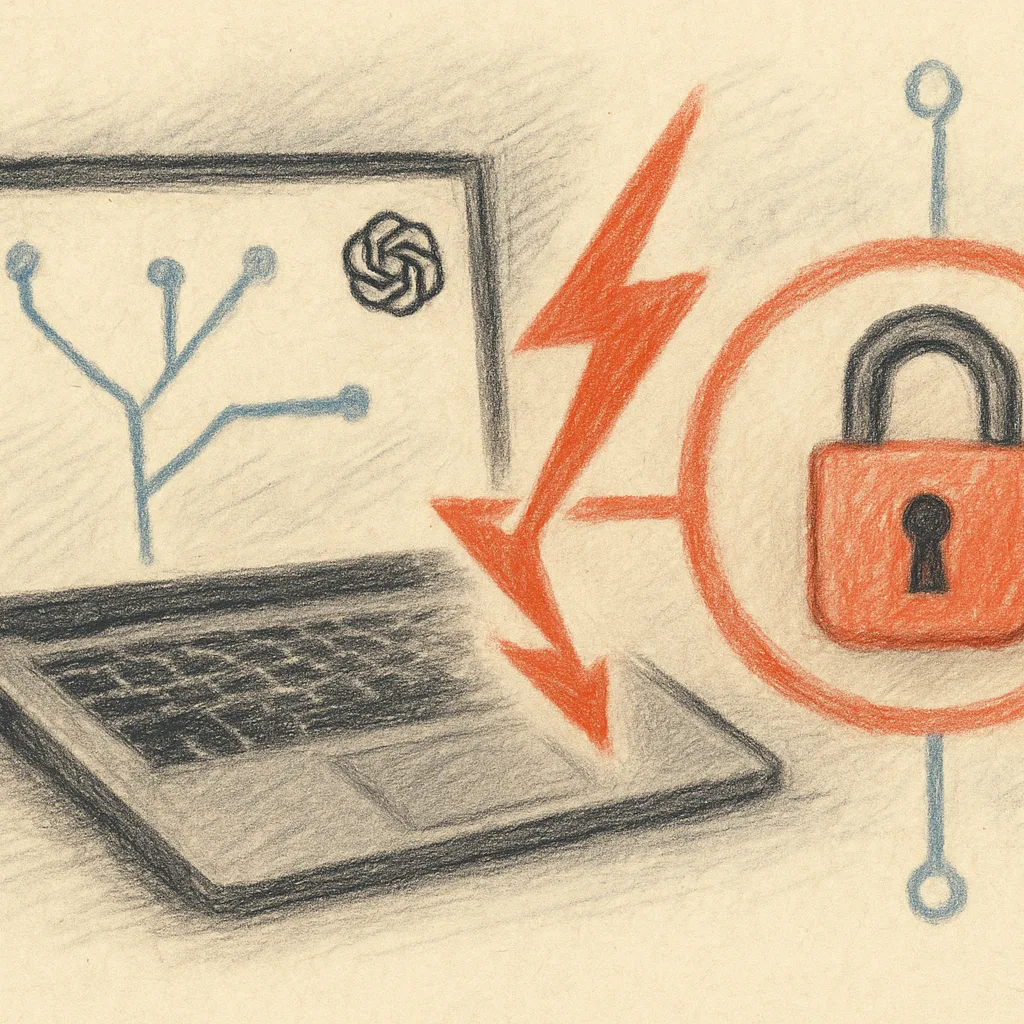
In short: Custom AI agents work well on back-office tasks with clear inputs, a known output and a person who checks the result: reading documents into records, drafting replies and proposals, and routing exceptions. They work badly where the task is a judgement about a person, an irreversible action or a process nobody has written down. The safe pattern is simple: the AI prepares the work, your team approves it.
Most back offices have the same kind of work: documents arrive, someone reads them, types details into another system, checks them against something else and passes the exceptions to a colleague. It is necessary, repetitive and easy to get slightly wrong at the end of a long day.
That is exactly where custom AI agents earn their place. It is also where it is easy to overreach. Here is how I separate the two.
What we mean by an AI agent
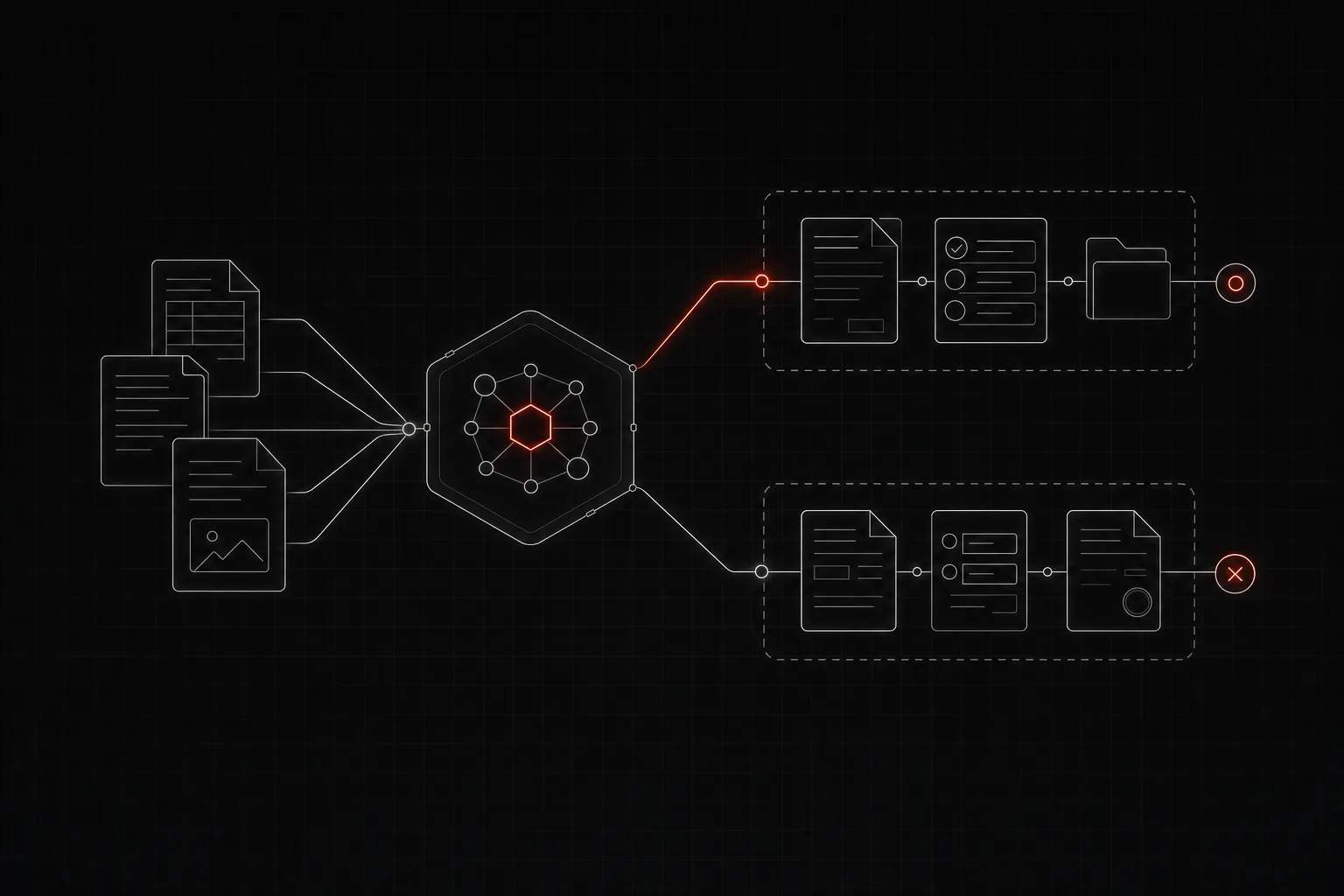
In our work, an agent is a workflow that uses an AI model to do several steps of a task: read an input, extract or draft something, check it against rules or other data, and hand the result to the right person or system.
On our AI page we describe it as automation with human approval: we build workflows that extract details, prepare records in your business software and route exceptions to the right colleague. Your team approves important results before they move on.
That last sentence is the design principle, not a disclaimer.
Where agents work well
Documents into records. This is the clearest win. In LabForty Core, our intranet, you drop a supplier bill or receipt into the expense form and AI suggests the values: supplier, VAT number, invoice dates, currency, net amount, VAT, total and the payment IBAN where present. You check the suggestions beside the document before approval and payment. The same pattern turns an issued invoice into a record ready for review, a proposal PDF into a filled form with the matching client, and a CV into a filled candidate form.
What makes this work: the input is a document, the output is a known set of fields, and a person can check the result against the source in seconds.
Drafts that a person sends. Turning an enquiry into a proposal draft is the example we use most often for a first project. The agent reads the enquiry, pulls the relevant service descriptions and prices from approved sources, and prepares a draft. Your team checks it before anything is sent.
Answers from approved documents. An assistant that answers staff questions from approved guides, policies and technical documents, and shows the sources to check, saves time without inventing policy. The key word is approved.
Routing and triage. Sorting incoming requests, tagging them and sending them to the right person. A wrong route costs a few minutes, not a client relationship. We use AI bots this way ourselves to triage support requests.
Where agents do not work, or need much more care
Decisions about people. Whether someone gets credit, a job or an insurance price is a judgement with legal and human consequences. Under the EU AI Act, AI systems for creditworthiness evaluation of natural persons, and for risk assessment and pricing in life and health insurance, are listed as high-risk (AI Act Service Desk, Annex III). An agent can prepare information. It should not be the decision.
Irreversible actions. Paying an invoice, sending a client message, deleting a record or changing a figure that is published. Agents prepare these. A person approves them. If you cannot undo it, a human presses the button.
Processes nobody has written down. If three colleagues would handle the same case three different ways, an agent will not fix that. It will automate the confusion. Write the rule first.
Unapproved or messy sources. An agent answering from an outdated price list, or from a shared drive full of drafts, will be confidently wrong. Clean, owned sources come before automation.
Rare, high-variance exceptions. Agents handle the common case well. The odd case that happens twice a year is usually cheaper and safer for a person to handle, with the agent simply routing it to them.
How to choose the first task
We ask clients to show us one task their team repeats. Then we check it against five questions:
- Is the input consistent? Documents, emails or forms of a known type.
- Is the output defined? A record, a draft or a route, not "a good decision".
- Can a person check it quickly? Ideally side by side with the source.
- Is the volume meaningful? Enough repetitions that saving a few minutes each time matters.
- Is a mistake recoverable? If not, add an approval step or choose another task.
If the answers are mostly yes, that is a good first agent. We then outline the setup, connections, costs and next steps.
Where the agent runs
For many financial firms, the first question is where the data goes. Agents can run on a private AI setup on your own servers, connected only to the documents and software you approve. You decide what, if anything, may leave your environment. Some models suit capable laptops; others need dedicated servers, so we test with your documents and size the hardware before recommending a setup.
Building it so it lasts
An agent is software, so it needs what software needs: access rules that mirror your existing permissions, a record of what the agent did and who approved it, tests when prompts or models change, and someone responsible for keeping it running. That is why we plan support alongside the build, and why agents often sit inside a larger system such as Core or a custom CRM.
FAQ
What is a good first AI agent for a back office?
A repeated task with a consistent input, a defined output and a quick human check, such as reading supplier bills into an expense form or turning an enquiry into a proposal draft.
Can an AI agent approve payments or send messages on its own?
In our builds, important results are approved by your team before they move on. Irreversible actions like payments or client messages should always have a human approver.
Should AI agents make credit or hiring decisions?
No. They can prepare information, but the decision stays with people. Credit scoring of natural persons and recruitment uses are listed as high-risk under the EU AI Act (Annex III).
Can agents run without sending data to external AI services?
Yes. Agents can run on local AI in an environment you control, connected only to the sources you approve.
Discuss one task
Show us one task your team repeats, and we will tell you honestly whether an agent is the right tool for it. Contact LabForty; we reply within 24 to 48 hours on working days.