
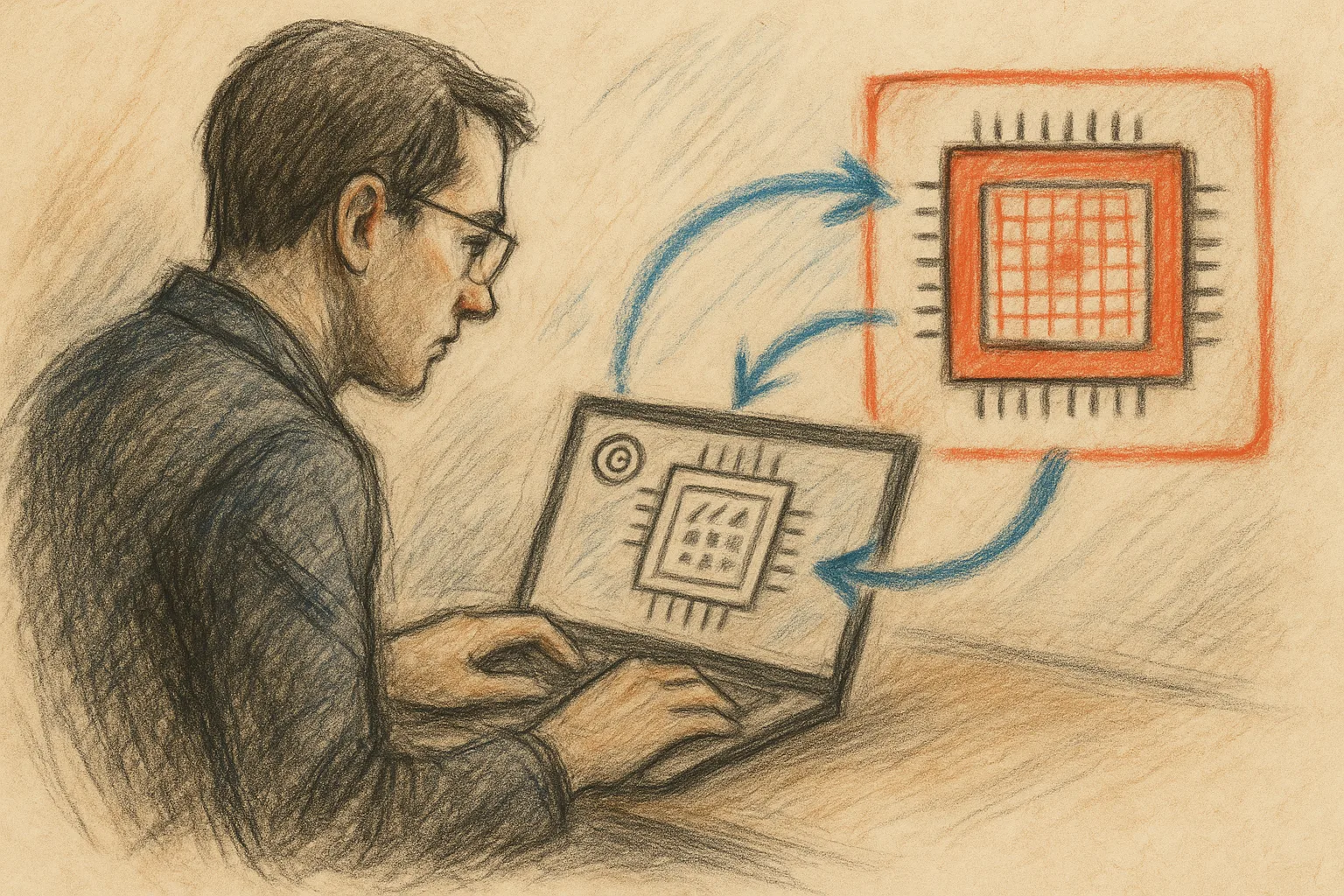
Anthropic wants more control over the silicon beneath Claude. On August 6, the company confirmed that it is building a custom silicon team to design chips for its AI models. The confirmation followed the discovery of job listings for semiconductor engineers and a silicon technical program manager, according to Ars Technica.
No chip or Claude model arrived with the announcement. Anthropic disclosed no processor name, architecture, manufacturing process, performance target or delivery date. It also provided no parameter counts, benchmark scores, license terms, prices or availability details. With key staff still being recruited, developers should not expect Claude’s cost or performance to change immediately.
The commitment is organizational. Anthropic is moving more silicon expertise inside the company so its hardware and model teams can design future systems together, rather than choosing chips as a fixed platform after building a model. The company has previously co-designed some hardware with partners. A dedicated internal team brings part of that work in-house.
That matters because chips and models set limits for each other. Model workloads can shape chip decisions, while chip capabilities can influence how later models are trained and served. Anthropic has not said which parts of this stack it plans to customize. Any claim of lower costs, higher efficiency or faster performance would therefore be premature.
Anthropic is not replacing its entire hardware fleet. The company says it will retain a multi-chip strategy, combining external suppliers with its own designs. Think of it as adding an internal engine workshop while still buying engines from established manufacturers. That could reduce dependence on one supplier without locking Claude to a single internal platform.
There are no benchmark comparisons yet, but the competitive pressure is visible. Ars Technica reports that OpenAI is developing Jalapeño, a Broadcom-developed custom chip intended for large language model inference in data centers. Google already runs models on its own hardware, Meta has designed and deployed chips, and Mistral is reportedly considering a similar move. Anthropic is shifting from partner-led hardware co-design to a dedicated internal silicon capability.
Why now? AI providers remain heavily reliant on Nvidia while demand for compute exceeds available capacity, according to the report. That creates a supply constraint and a strategic dependency. Custom designs could eventually give Anthropic more control over the hardware used to train or serve Claude. The company has published no evidence that its planned chips will outperform existing options.
For now, the announcement is aimed less at individual Claude users or teams seeking hardware to buy than at the infrastructure engineers, semiconductor specialists and technical program managers Anthropic needs to recruit. Internal silicon could eventually affect capacity, latency or pricing for Claude API developers and enterprise customers, but Anthropic has made no specific commitments on any of those measures.
Can Anthropic produce measurable gains for Claude through model-and-chip co-design without sacrificing the flexibility of its multi-chip strategy?